 Lebanon Sightseeing Tours Powered by Barakat Travel |
|||||||||||||||||||||||||||||||||||||||||||||||||||||||||||||||||||||||||||||||||||||||||||||||||||||||||||||||||||||||||||||||||||||||||||||||||||||||||||||||||||||||||||||||||||||||||||||||||||||||||||||||||||||||||||||||||||||||||||||||||||||||||||||||||||||||||||||||||||||||||||||||||||||||||||||||||||||||||||||
Tour Programme & Schedule
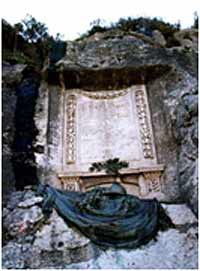
Batroun The coastal city of Batroun (Greek: Βοτρύς, Arabic: البترون) located in northern Lebanon is one of the oldest cities of the world. Batroun is home to a Lebanese Red Cross First Aid Center. The Dog River A 14th century BC treaty, concluded by Ramses II, set the Nahr al-Kalb as the border between Egypt and the possessions of the Hittites. Past generals and conquerors have traditionally built monuments at the mouth of the Nahr al-Kalb. Ramses II, Nebuchadnezzar, Esarhaddon, Marcus Aurelius, and even armies from modern-day France and Grea t Britain have engaged in this practice. In 1946, a monument was erected in celebration of Lebanon’s independence, which came in 1943. In 2000, Lebanese demonstrators, including supporters of ex-general and current
politician Michel Aoun, unsuccessfully attempted to erect two new
monuments, one marking the departure of Israeli troops from
Lebanon, and the other anticipating the withdrawal of Syrian
forces. In 2005, a commemorative stela at the river was listed in
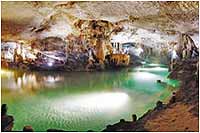
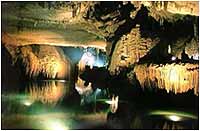
the UNESCO Memory of the World initiative. Jeita Grotto In 1958, Lebanese speleologists discovered the upper galleries 60 metres (200 ft) above the lower cave which have been accommodated with an access tunnel and a series of walkways to enable tourists safe access without disturbing the natural landscape. The upper galleries house the world's largest stalactite, they are composed of a series of chambers the largest of which peaks at a height of 120 metres (390 ft).
Aside from being a Lebanese national symbol and a top tourist
destination, the Jeita grotto plays an important social, economic
and cultural role and is a finalist in the New 7 Wonders of
Nature competition.
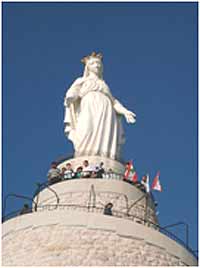
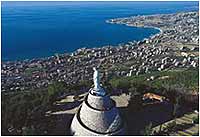
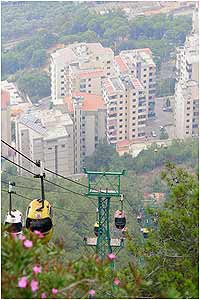
Harissa - Lebanon Harissa (Arabic حريصا) is an important Lebanese pilgrimage site high above Jounieh, located at 650 meters altitude from the coast and 20 km distance from Beirut the capital city; the site is accessible either by a steep winding road or a nine-minute journey by a gondola lift, known as the "Téléférique". It attracts both pilgrims and tourists who want to enjoy views of Jounieh. The main site is a huge 15-ton bronze (and painted white) statue of Virgin Mary, known as Our Lady of Lebanon or Notre Dame du Liban/Harissa or Our Virgin of Lebanon, with her arms outstretched. The statue was made at the end of the 19th century and inaugurated in 1908. Inside the statue's base there is a small chapel. A huge modernistic Maronite cathedral built of concrete and glass stands right beside the statue. Among other churches of various denominations, it is worth mentioning the Byzantine-style, Melkite Greek Catholic basilica of St. Paul, located south of the statue and built between 1947 and 1962. The Apostolic Nunciature (Papal Embassy), as well as the residences of four cardinals of Eastern Catholic Churches, are in the vicinity of Harissa and Our Lady of Lebanon.[1]
On May 10, 1997, Pope John Paul II visited
Harissa.
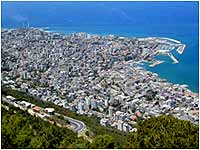
Jounieh Jounieh (Arabic جونيه, or Junia, جونية) is a Mediterranean coastal city about 15 kilometers north of Beirut, Lebanon. It is known for its seaside resorts and nightclubs, as well as its old stone souk, ferry, and cablecar (le téléphérique), which takes passengers up the mountain to the shrine of Our Lady of Lebanon in Harissa. Above Jounieh, and on the way to Harissa, a small hill named Bkerke (Arabic بكركي, or Bkerki), overlooking the Jounieh bay, is the seat of the Patriarch of the Maronite Catholic Church. Its inhabitants are predominantly Maronite and it's thus known to be the largest Maronite city in the world. in other way do not miss to visit the old shops( old souk), in old Jounieh
Car-Cable (Teleferique) In only nine minutes, the Teleferique transports passengers from the Mediterranean bay of Jounieh, above the maritime highway and the pine-forested steep mountain, to an altitude of 650 meters at the Our Lady of Lebanon shrine in Harissa.[1] The Teleferique offers passengers some of the most beautiful panoramic views in the world. Currently, the ride from Jounieh to Harissa on the Teleferique costs 7,500 L.L or US $5.00
Byblos City
It is mentioned in the Bible in 1 Kings 5:18, referring to the
nationality of the builders of Solomon's Temple, and also in Ezekiel
27:9, refering to the riches of Tyre.
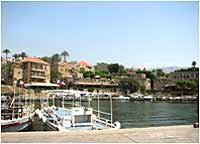
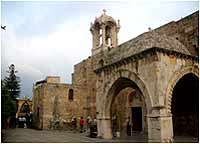
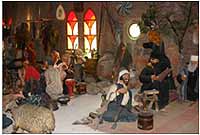
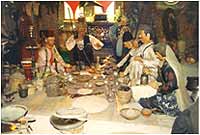
Places to visit Crusader Fort Byblos Historic Quarter Ancient Phoenician Temples In the archaeological site of Byblos there are the remains of the Great Temple (also known as L-Shaped temple) built in 2700 BC, Temple of Baalat Gebal built in 2700 BC and Temple of the Obelisks built around 1600 BC. Byblos Castle Main article: Byblos Castle Byblos Castle was built by the crusaders in the 12th century. It is located in the archaeological site near the port. Medieval City Wall The old medieval part of Byblos is surrounded by walls running about 270m from east to west and 200m from north to south Byblos Wax Museum Main article: Byblos Wax Museum This museum displays wax statues of characters from Phoenician times to current days St John the Baptist Church Work on the church started during the crusades in 1150. It was damaged during an earthquake in the 12th century and also during several conflicts. Byblos Fossil Museum Main article: Byblos Fossil Museum Byblos Fossil Museum has a collection of fossilized fish, sharks, eel, flying fish, and other marine life, some millions of years old. Historic Quarter and Souks In the southeast section of the historic city, near the entrance of the archaeological site, is an old market where tourists can shop for souvenirs and antiques, or simply stroll along the old cobblestone streets and enjoy the architecture. Byblos International Festival Main article: Byblos International Festival This summer music festival is an annual event that takes place in the historic quarter.
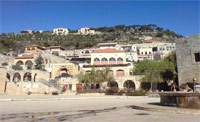
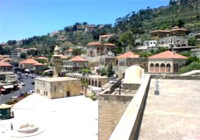
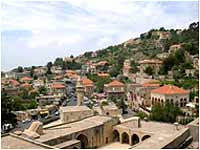
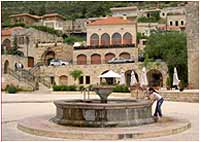
Deir Al Kamar Deir el Qamar (in Arabic دير القمر, meaning "Monastery of the Moon") is a village in south-central Lebanon, five kilometres outside of Beiteddine, consisting of stone houses with red-tiled roofs. During the 16th to 18th centuries, Deir el Qamar was the residence of the governors of Lebanon. It is also notable for its 15th century Fakhreddine Mosque, Fakhreddine II Palace, and other historical palaces and administrative buildings. During its peak, the city was the centre of Lebanese literary tradition. It was the first village in Lebanon to have a municipality in 1864, and it is the birthplace of many well known personalities, such as artists, writers, and politicians. It was the capital of the Druze Cancimat of Lebanon (1840-1860).
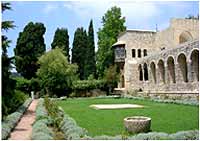
Beit Eddine Beit ed-Dine (in Arabic بيت الدين, translates to "House of Religion") is a small Lebanese town in the Chouf District, approx. 50 km southeast of Beirut and near the town of Deir el-Qamar from which it is separated by a steep valley. The town is famous for its magnificent Beiteddine Palace which hosts the Beiteddine Festival every summer. Local emir Bashir Shihab II who was later appointed to rule Mount Lebanon, started building the palace in 1788 at the site of the Druze hermitage (hence the town's name, translating as "House of Faith"). It took about 30 years to complete. The best craftsmen from Damascus and Aleppo as well as Italian architects were invited and given much freedom, so its style is a cross between traditional Arab and Italian baroque. After 1840, when Bashir was sent into exile the palace was used by the Ottomans as a government building, during the French Mandate its role was preserved and it served as a local administrative office. In 1934, it was declared a national monument. In 1943, Bechara El Khoury, the first Lebanese president, declared it the official president's summer residence. During the Lebanese civil war it was heavily damaged. After 1984, when fighting in the area receded, Walid Jumblatt ordered its restoration. Parts of the palace are today open to the public while the rest is still the president's summer residence. Bashir built three more palaces in the town for his sons, till today only Mir Amin Palace survived and is today a luxury hotel. Beiteddine is home to a Lebanese Red Cross First Aid Center.
Located high in the mountains of the Chouf, has beautiful views of the valleys below dotted with pine trees and villages and the Cedar forests above. There are many springs around the town, including the Al Ka’a Spring, where water was drawn to Beit Ed-Dine Palace during the rule of Emir Bachir; the Al Re’ayan Spring, where a large pumping station distributes potable water to Aley. the area now gull with restaurants and cafes.
|
|
||||||||||||||||||||||||||||||||||||||||||||||||||||||||||||||||||||||||||||||||||||||||||||||||||||||||||||||||||||||||||||||||||||||||||||||||||||||||||||||||||||||||||||||||||||||||||||||||||||||||||||||||||||||||||||||||||||||||||||||||||||||||||||||||||||||||||||||||||||||||||||||||||||||||||||||||||||||||||||
|
-Daily Tours starts at
9.00am or in demand -For lunch or dinner add 30.00$ for each meal -Choose and arrange your trip on your demand also -All tours depart from your hotel or residence place, and dop-of also there -Also, ask about cities (Aley, Bhamdoon, Broumana, Beitmery, Afqa waterfalls, Ibrahim river, Litani river, Assi river, Musailaha fort, Zahle city,etc) -We can arrange religious tours all around lebanon -All the tours have a guide with excluding rate -The packages do not share any other tourists -To order any of these above mentioned tours, email us : barakat.travel@lebanon.com |
|||||||||||||||||||||||||||||||||||||||||||||||||||||||||||||||||||||||||||||||||||||||||||||||||||||||||||||||||||||||||||||||||||||||||||||||||||||||||||||||||||||||||||||||||||||||||||||||||||||||||||||||||||||||||||||||||||||||||||||||||||||||||||||||||||||||||||||||||||||||||||||||||||||||||||||||||||||||||||||